
Simple Tool That Can Calm Your Nervous System in Under 10 Minutes (Even While Doing Chores)

I was washing dishes, tired from the day, headphones in. I put on a track of EMDR bilateral beats with beach waves in the background — something I’d been experimenting with as a way to decompress.
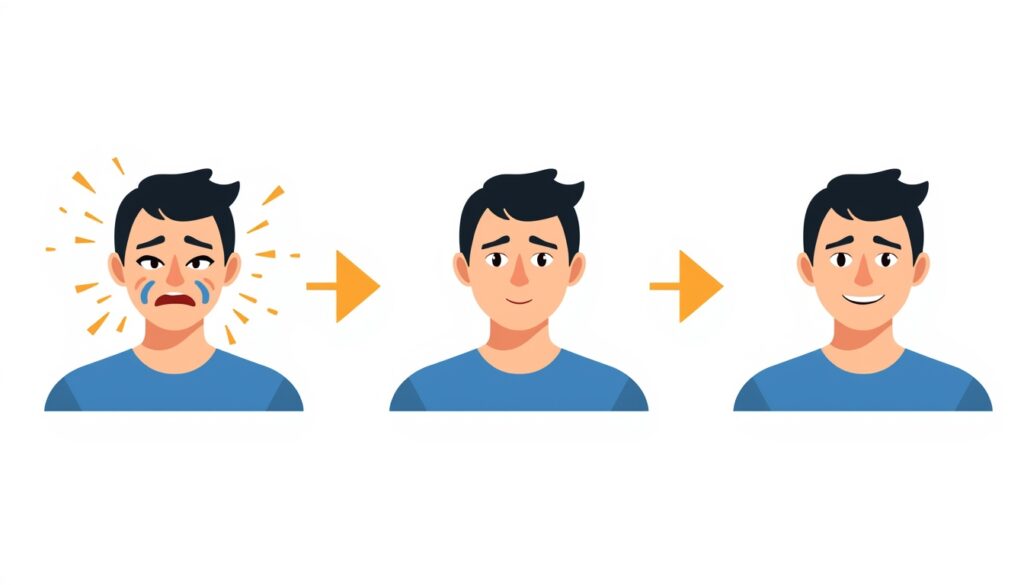
Nine minutes later I had to take the headphones out. I was yawning repeatedly, my eyes were watering, and there was a heaviness in my body that felt less like exhaustion and more like release. The dishes were half-done. I hadn’t been sitting still, hadn’t been doing any kind of focused meditation or breathing exercise. I’d been scrubbing dishes as quickly as I could.
And my nervous system had quietly shifted modes anyway.
That experience made me want to understand what was actually happening — and to write about it, because I suspect it’s a tool more people in trauma recovery could use, and most of them haven’t heard of it outside of a clinical context.
What Bilateral Stimulation Is
Bilateral stimulation refers to sensory input that alternates rhythmically between the left and right sides of the body or the left and right sides of the brain. The most familiar version of this is the eye movement component of EMDR therapy — Eye Movement Desensitization and Reprocessing — where a therapist guides a patient’s eyes back and forth while they process traumatic memories.
But bilateral stimulation isn’t limited to eye movements, and it isn’t only for trauma processing in a clinical session. The alternating left-right signal can also be delivered through sound — a tone or beat that shifts between the left and right ear in a steady rhythm — or through tapping, walking, or rocking.
The audio version is the most accessible for everyday use. EMDR bilateral beats, sometimes layered with ambient nature sounds or music, are widely available and can be used with any set of headphones. The left-right alternation happens automatically as you listen.

What It Does to the Nervous System
The mechanism isn’t fully understood, but the current working explanation is that rhythmic bilateral stimulation mimics something the brain does naturally during REM sleep — the phase where emotional memories are processed and the nervous system consolidates the day’s experiences.
During REM sleep, the eyes move rapidly back and forth beneath closed eyelids. The brain is highly active, but the body is relaxed. It’s the phase most associated with emotional regulation, and disrupted REM sleep is consistently associated with worsened PTSD symptoms and emotional dysregulation.
Bilateral stimulation, in waking life, appears to activate some of the same neural processes. The rhythmic alternating input tends to reduce sympathetic nervous system activity — the fight-flight-freeze activation — and increase parasympathetic tone, which is the rest-and-digest state associated with safety, calm, and recovery.
In practical terms: it helps the brain shift out of stress mode.
The yawning I experienced after nine minutes is a well-documented physiological marker of exactly this shift. Yawning increases when the parasympathetic system activates. Watery eyes can accompany autonomic release. The heaviness is the body’s musculature beginning to let go of tension it’s been holding. These aren’t incidental symptoms — they’re the body reporting that it has changed states.

Why It Worked While I Was Doing Chores
This is the part that surprised me most, and that might surprise you too: the regulation happened not in stillness, but in motion, while my attention was occupied with a task.
This is actually consistent with how bilateral stimulation works. Unlike meditation, which typically requires a degree of stillness and focused attention, bilateral audio works through a more passive channel. The auditory system is always running — it doesn’t require you to direct attention toward it to function. The left-right alternation reaches the nervous system regardless of what else you’re doing.
This makes it genuinely practical in a way that many nervous system regulation tools aren’t. Not everyone can sit still for twenty minutes. Not everyone finds meditation accessible, especially in early trauma recovery when stillness can feel more activating than calming. The ability to regulate while doing something — washing dishes, folding laundry, going for a slow walk — removes a real barrier.
Walking, interestingly, is itself a mild form of bilateral stimulation. Left foot, right foot, back and forth. This may be part of why slow walking has such consistent calming effects, and why therapists have long recommended walking as a regulation tool. Bilateral audio on top of walking creates a compounded effect.
What You Might Notice
Everyone’s experience is slightly different, but there are some common markers that the bilateral audio is doing its work. Recognizing them helps you trust the process rather than stopping early because something unfamiliar is happening.
Yawning
The most reliable indicator. If you start yawning within a few minutes of putting the audio on, your nervous system is downshifting. This is the body releasing activation, not tiredness (though it can feel similar). Let it happen.
Watery or heavy eyes
Related to the same parasympathetic shift. The body is beginning to move toward a processing and rest state. Not a problem — a signal.
A sense of heaviness or softening in the body
Muscle tension you weren’t consciously aware of begins to release. Shoulders may drop slightly. The jaw may loosen. There can be a general sense of the body becoming more comfortable in itself.
Slowed or deepened breathing
This often happens without any deliberate effort. The breath naturally lengthens as parasympathetic tone increases.
A quieter mind
Racing thoughts or anxious loops may lose some of their momentum. This isn’t suppression — it’s the brain shifting into a mode where high-alert processing is less dominant.
How to Use It
The practical approach is simpler than most nervous system regulation tools.
Here is the EMDR bilateral beats audio that I used to downregulate my nervous system:
15 minute Nervous System Reset >>
Put on headphones. The bilateral effect requires stereo separation — it won’t work through a single speaker or without headphones, because the left-right alternation needs to reach each ear independently.
Don’t force a particular state. You don’t need to relax deliberately, breathe in a special way, or clear your mind. Just let the audio run and continue whatever you’re doing. The nervous system does the work.
Five to fifteen minutes is generally sufficient. Longer isn’t necessarily better. Many people find that the significant shift happens within the first ten minutes, and that extending the session beyond fifteen minutes produces diminishing returns. Your instinct to stop when the response feels complete is a good guide.
Use it when regulation would be helpful, not as a strict daily requirement. After a stressful interaction. Before trying to sleep when the mind is busy. After a difficult therapy session. When fatigue is high and rest isn’t coming naturally. When the body needs to downshift and won’t do it on its own.
A Few Cautions Worth Knowing
Bilateral audio is a mild regulation tool, not therapy. Used for general nervous system regulation — without deliberately bringing up traumatic memories — it’s gentle and low-risk for most people. But a few things are worth knowing.
If you’re in an activated state and start experiencing strong emotions surfacing, or notice yourself feeling destabilized or dissociated, stop the session and use a simpler grounding technique: feel your feet on the floor, look around the room and name what you see, drink something cold. The audio can occasionally move the nervous system faster than is comfortable, and that’s a signal to slow down rather than push through.
Bilateral audio is not a replacement for trauma therapy if that’s something you need. It’s a complement — a tool you can use between sessions, on ordinary days, as part of a broader practice of caring for your nervous system. If you’re working with a therapist, it’s worth mentioning that you’re using it.
Finally: if you’re new to this, start short. Five minutes. See how it lands. The nervous system response can be stronger than expected if you’ve been in a dysregulated state for a while, and giving yourself permission to stop early and check in is always a good practice.

Why This Matters in Trauma Recovery
For people recovering from complex trauma, the nervous system is often in a state of chronic dysregulation — oscillating between hyperactivation (anxiety, vigilance, reactivity) and hypoactivation (numbness, fatigue, disconnection). Both states are exhausting, and both interfere with the capacity to engage with the therapeutic work that actually creates change.
Regulation tools — practices that help the nervous system spend more time in the window between those extremes — are not secondary to recovery. They’re foundational. Without some basic capacity to regulate, the deeper work is harder to access and harder to sustain.
Bilateral audio is one of the most accessible regulation tools I’ve encountered, precisely because it requires so little. No special skill. No perfect conditions. No lengthy time commitment. Just headphones, a few minutes, and enough willingness to let the body do something it already knows how to do.
The nervous system shift that happens in those five to ten minutes can make the rest of the day meaningfully different.
15 Minute Nervous System Reset — This is the bilateral beat track I used during the experience described in this post.
Bilateral stimulation audio is a general nervous system regulation tool and is not a substitute for professional trauma therapy. If you are working with a therapist on trauma processing, let them know you are using bilateral audio independently so they can support you appropriately.

Our Fact Checking Process
Articles are written based on lived experience and supported by research from psychology and trauma-recovery literature. Sources are reviewed to ensure accuracy and responsible presentation of information.Our Review Board
Content is created using trauma-informed principles and focuses on practical tools and insights for survivors of narcissistic abuse and complex trauma.