
Why Victims of Narcissistic Abuse Are Conditioned to Lose Every Conflict
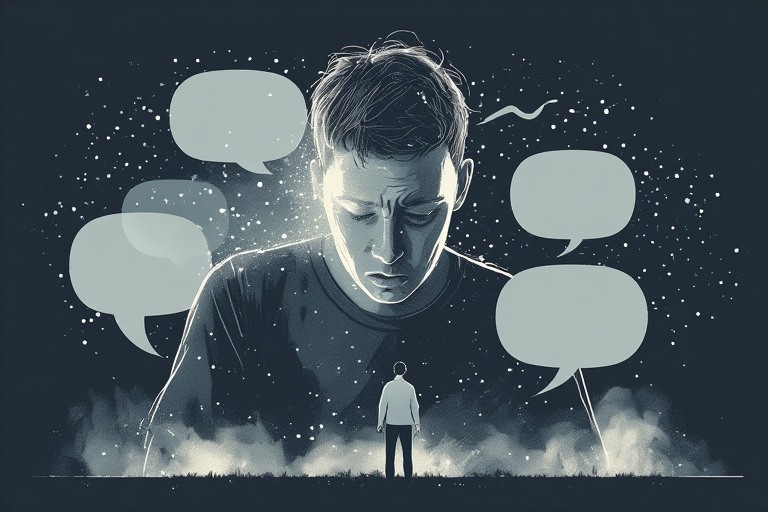
For years, I thought I had a skill gap.
Every time I froze in an argument, went blank when someone challenged me, or walked away from a confrontation unable to say a single thing I wanted to say — I told myself the same story. I just needed better comebacks. I needed to read more books on confrontation. I needed to mentally rehearse what I’d say next time. If I could just prepare better, I’d finally be able to stand up for myself.
Next time never came. The freeze always returned. And the self-criticism that followed — the internal loop of I’m so weak, why can’t I just say something — was sometimes worse than the conflict itself.
It took a long time to understand that I wasn’t missing a skill. I was experiencing a conditioned nervous system response. And the place that response was trained wasn’t a schoolyard or a difficult workplace. It was home.
The Freeze Response Is Not Weakness
When people freeze in conflict — when the mind goes blank, words disappear, and the body seems to lock — the common interpretation is failure. A character flaw. A lack of courage or backbone.
But freezing is a neurological event, not a moral one.
The freeze response is one of the nervous system’s three primary threat responses, alongside fight and flight. When the threat is perceived as inescapable — when neither fighting nor fleeing seems viable — the system shifts into freeze. It’s a survival mechanism, not a personal failing. Animals do it. Humans do it. And critically: it’s not something you can think your way out of in the moment, because the part of the brain responsible for language, reasoning, and quick-witted responses goes partially offline during this state.
This is why preparing comebacks doesn’t work. This is why reading books on assertiveness doesn’t work. This is why telling yourself next time will be different doesn’t work. In the moment of a genuine freeze response, the cognitive resources needed to access those prepared responses are simply not available. The nervous system has taken them offline as part of its threat management process.
You are not failing to use a skill you have. You are in a physiological state in which the skill cannot be accessed.
Where the Conditioning Comes From
The freeze response itself is universal. But not everyone experiences it in the same situations. For many people, ordinary disagreement, criticism, or social conflict doesn’t trigger a freeze at all. Their nervous system treats it as uncomfortable but manageable. They can think, respond, hold their ground.
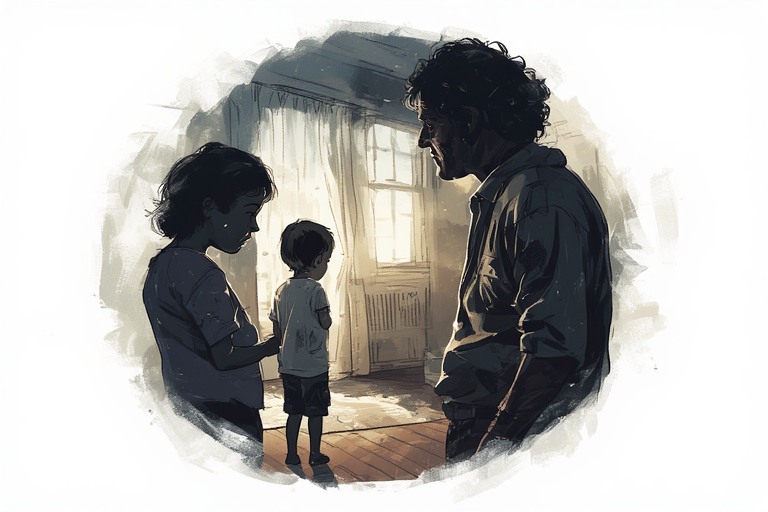
For others — particularly those who grew up in households organized around a dominant, critical, or narcissistic authority figure — ordinary conflict activates the same threat response that extreme danger would in someone else.
The reason is conditioning.
When a child grows up in an environment where expressing disagreement leads to punishment, where defending yourself escalates the attack rather than ending it, where the authority figure always wins and always will — the nervous system draws a conclusion that becomes deeply encoded: conflict equals danger. Speaking up equals punishment. Defending yourself makes things worse.
These conclusions aren’t conscious beliefs the child forms after reflection. They’re survival rules the nervous system installs through repeated experience. And once installed, they operate automatically — activated by any situation that pattern-matches to the original threat environment.
So when conflict arises in adulthood — with a colleague, a partner, a stranger on the street — the nervous system doesn’t evaluate it fresh. It matches the pattern and responds with the response it learned: freeze. Appease. Go quiet. Let it pass.
The Scapegoat’s Specific Setup
Within narcissistic family systems, the scapegoat occupies a particular position that makes this conditioning especially thorough.
The scapegoat is the family member designated to receive the group’s displaced blame, frustration, and shame. They are the identified problem. The one who is wrong, deficient, difficult. Their role in the system is to absorb conflict so that other family members can maintain a sense of stability and superiority.
In practical terms, this means the scapegoat grows up in an environment where:
Every conflict they are involved in, they are by definition in the wrong. The framing of disagreements is pre-decided. Their perspective is not a legitimate competing view — it’s evidence of their deficiency.
Defending themselves doesn’t work. Not because their defenses are inadequate, but because the system is not set up to allow the scapegoat to win. When they push back, the response is more pressure, more criticism, escalation. The lesson the nervous system draws: defending yourself doesn’t reduce the threat. It increases it.
Appeasing works better — temporarily. Going quiet, agreeing, making yourself small produces at least a temporary reduction in hostility. So appeasement, aka fawning, gets reinforced as the adaptive strategy.
The result, by the time the scapegoat reaches adulthood, is a nervous system that has been comprehensively trained to lose. Not because they lack strength or courage. But because, for their entire developmental period, losing was the safest available response to conflict.
Why Bullies Found You
One of the more painful recognitions that comes from understanding this dynamic is seeing how it extended beyond the family.
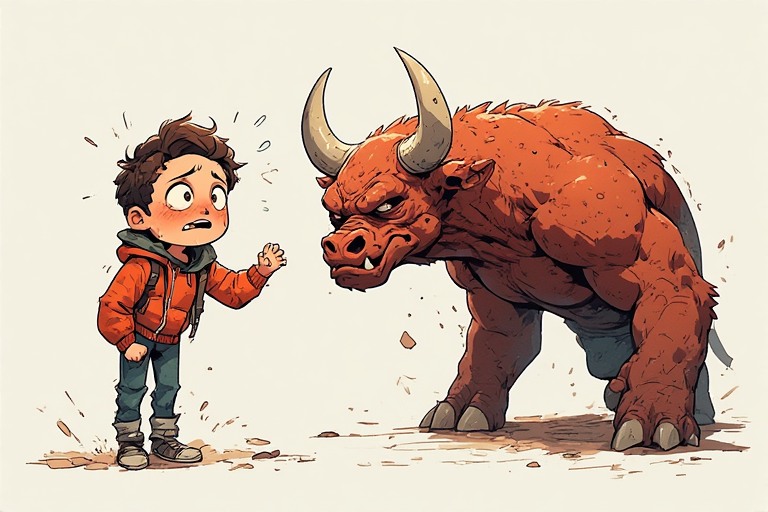
Children who have been broken down at home — who carry a freeze response to conflict, who have learned to appease rather than resist, who radiate a particular kind of nervous system exhaustion — are identifiable to bullies. Not consciously, not through any deliberate analysis. But social threat detection is remarkably accurate, and people who prey on vulnerability can sense it.
This isn’t a moral failing of the scapegoat. It’s a direct transmission of what happened at home into social environments. The patterns learned there — the freeze, the blank mind, the inability to respond — travel intact into school, work, friendships, and every other arena where conflict can arise.
So the person who couldn’t defend themselves against their father couldn’t defend themselves against the schoolyard bully, because the nervous system response was identical. The same freeze. The same blank. The same aftermath of I should have said something.
The family did not just create pain at home. It created vulnerability everywhere.
The Missing Piece Was Never the Comeback
This is perhaps the most important thing to understand about this pattern: the solution was never a better arsenal of responses.
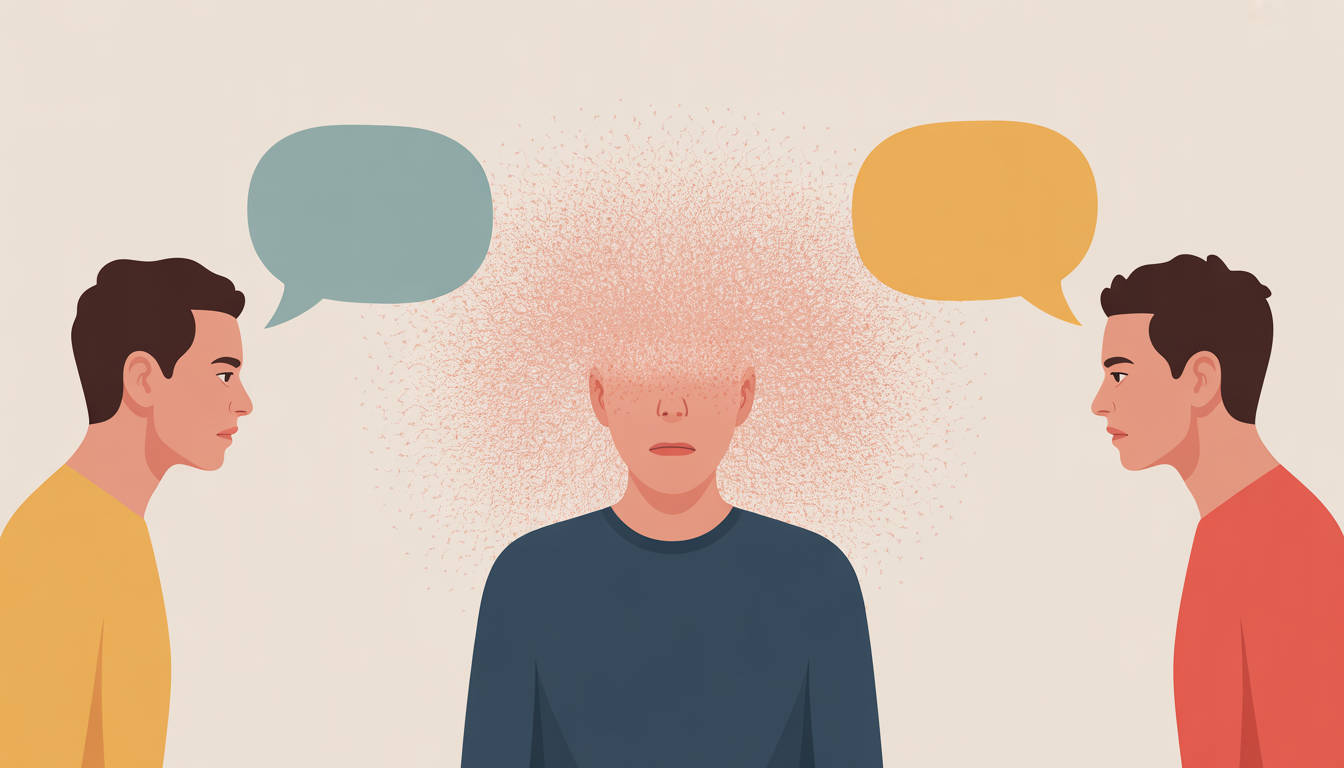
The problem was not a lack of clever things to say. It was a nervous system that went offline at precisely the moment a clever response would be needed.
No amount of rehearsal, reading, or mental preparation addresses that. Because the issue isn’t knowledge or intention — it’s physiological state. A nervous system in freeze cannot access the prepared material, no matter how well-prepared it is.
What actually changes this is not a skill acquisition. It’s a nervous system update.
When the nervous system is sufficiently regulated — when it has accumulated enough evidence that conflict does not equal annihilation, that speaking up does not automatically trigger escalating punishment — it stops going offline. Not all at once. Not permanently after a single experience. But gradually, through repeated experiences of surviving conflict without catastrophe, it begins to stay online. And when the nervous system stays online, words come. Responses form. The blank stops being blank.
This is why trauma therapy — particularly work that addresses the nervous system directly, rather than just insight — is the relevant intervention here. It’s not about learning what to say. It’s about creating the internal conditions in which the capacity to respond can remain available.
Other People Were Not Naturally Braver
There is a specific, painful story that people carrying this pattern tell themselves: everyone else is naturally good at conflict. I am uniquely deficient. Confident people have something I was born without.
This story is wrong.
People who can hold their ground in disagreements, who don’t freeze under social pressure, who can respond to challenges without going blank — they are not demonstrating a natural trait that others lack. They are demonstrating a nervous system that was not taught to associate conflict with danger.
That’s the difference. Not character. Not courage. Not some innate quality of psychological strength.
They grew up somewhere that conflict was survivable. Where disagreement was a normal part of interaction that sometimes ended well, sometimes ended poorly, but did not reliably produce punishment, humiliation, or escalation. Their nervous system never learned the rule that conflict equals annihilation — so it stays functional when conflict arises.
The person who froze, who appeased, who couldn’t find words — their nervous system learned a different rule in a different environment. A more dangerous one. And it responded accordingly.
That is not weakness. It is a logical response to an illogical situation.

What Recovery Actually Looks Like
Understanding this pattern doesn’t immediately change the freeze response. But it changes the self-narrative around it, which matters enormously.
The person who has spent years believing they are weak, deficient, constitutionally incapable of standing up for themselves — that belief is not just painful. It actively prevents healing, because it frames the problem as a character issue that requires willpower to overcome, rather than a nervous system pattern that requires safety and time to update.
When the frame shifts — from I am weak to I was conditioned — the path forward becomes different. Not easier, necessarily. But clearer.
The work is not to force yourself to be brave in moments of conflict. The work is to gradually build a nervous system that no longer equates conflict with annihilation. This happens through therapy, through safe relationships in which conflict does arise and is survived, through accumulated experience that updates the old rule.
It’s slow. And it doesn’t produce a dramatic moment where you suddenly become someone who never freezes. What it produces is a gradually expanding capacity to stay present under pressure. To find that the blank becomes less complete. That words start to come, even if not perfectly. That afterward, the self-attack is a little quieter.
Those small shifts are the actual work. They don’t look like strength. But they are.
A Note on Self-Compassion
If you have spent years criticizing yourself for not being able to defend yourself — for the freeze, the blank mind, the endless replays of what you should have said — this is worth sitting with directly.
You were not failing. You were surviving.
The response that looked like weakness was the best available adaptation to an environment that was genuinely unsafe. It protected you from escalating punishment in a context where fighting back made things worse. It was intelligent. It was functional. It was right for the circumstances that created it.
The tragedy is not that you developed this response. It’s that the environment made it necessary.
Carrying that with clarity — not as an excuse or a reason to remain stuck, but as an accurate account of what happened and why — is the foundation from which something different can eventually be built.
The freeze was not the problem. The freeze was the answer to the problem. And the problem was never yours to begin with.
The patterns described here — freeze responses in conflict, conditioned appeasement, the inability to access self-defense under pressure — are common presentations of complex trauma and narcissistic family dynamics. Trauma-informed therapy, particularly somatic and EMDR approaches, works directly with the nervous system conditioning that underlies these patterns. However there are risks in choosing the wrong therapist. Here you can learn the red flags of a bad therapist who is not trauma informed.

Our Fact Checking Process
Articles are written based on lived experience and supported by research from psychology and trauma-recovery literature. Sources are reviewed to ensure accuracy and responsible presentation of information.Our Review Board
Content is created using trauma-informed principles and focuses on practical tools and insights for survivors of narcissistic abuse and complex trauma.