
Recognizing Narcissistic Patterns in Storytelling: Ghosts of Tsushima

Sometimes a story hits differently than it should. You’re watching a scene — film, game, book — and a character says something to another character, and something in you tightens. Not because the scene is particularly dramatic. Because something in the exchange is familiar in a way that has nothing to do with the story itself.
This recognition is not imagination. It is pattern detection. And for people who grew up with a parent who used authority to undermine rather than to support, that pattern detection can be extraordinarily precise — sometimes more precise than the average viewer or reader, because the original experience trained the nervous system to read these dynamics with a clarity that other people simply don’t have.
Ghost of Tsushima contains two brief exchanges that illustrate one of the most common patterns in narcissistic authority — the use of past failure to neutralize present confidence — with unusual psychological accuracy. Looking at those exchanges closely, and understanding exactly what is happening in them, illuminates something that is very hard to see from the inside when you’re the person it’s being done to.
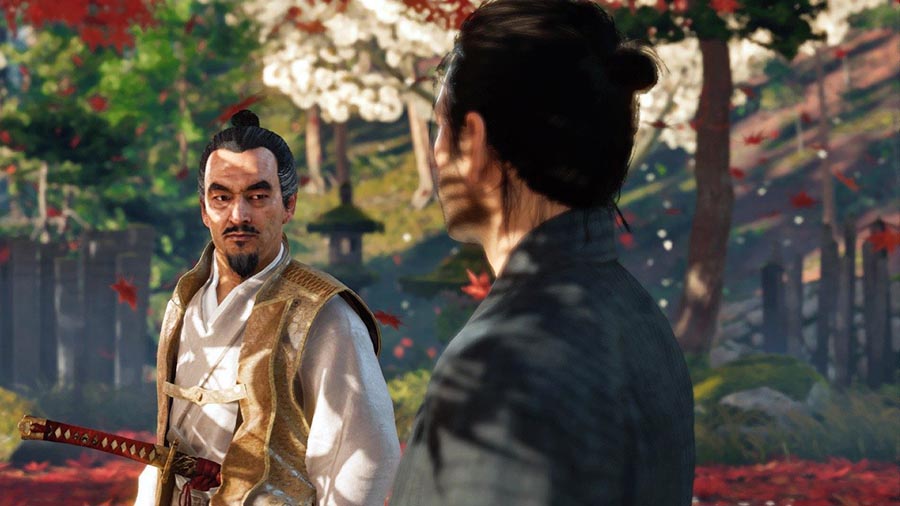
The First Exchange: Weaponizing Past Failure
Jin Sakai is riding with his uncle, Lord Shimura. He has just rescued Shimura from captivity. He tells his uncle, honestly and without games, that he trusts Yuna — the person who helped make the rescue possible.
Jin: I trust Yuna.
Shimura: Just like you trusted Ryuzo.
Read that exchange carefully. What Jin offered was relational honesty — a genuine statement about a person he has come to rely on. There was no defensiveness in it, no manipulation, no claim to authority. Just a direct expression of his experience.
What Shimura offered back was not a response. It was a status correction.
By invoking Ryuzo — a previous alliance that failed — Shimura reframes Jin’s statement of trust into evidence of deficient judgment. He does not say: tell me more about Yuna, what makes you trust her? He does not engage with the content at all. He goes directly to the verdict: your independent judgment has failed before, therefore it is suspect now.
Notice what this move accomplishes. In a single sentence, Shimura has repositioned himself as the authority over Jin’s capacity for judgment, and repositioned Jin as someone whose assessments require that authority’s evaluation before they can be trusted. It is not conversation. It is hierarchy enforcement, performed through the selective recall of a past mistake.
The technique is precise because it is not obviously wrong. Ryuzo did represent a failure of judgment. The statement is technically true. What makes it a power move rather than useful feedback is the context — that it arrives not in response to anything Jin did wrong, but in response to an honest expression of trust — and the function it serves, which is not to help Jin develop better judgment but to remind him that his judgment is subordinate to Shimura’s.
The Second Exchange: Rank as Character
The second scene involves Yuna. She mentions where she grew up. Shimura’s response is immediate:
Yuna: I grew up there.
Shimura: Is that where you learned how to steal?
Same mechanism, different target. Yuna has offered a personal fact — her place of origin. Shimura responds by reducing that origin to its lowest moral interpretation: the place where she learned criminal behavior.
He does not ask about her history. He does not consider what survival in that village might have required. He reaches for the most diminishing frame available and delivers it as though it were simple observation.
What is accomplished: Yuna is reminded of her social rank. Her history is transformed from context into accusation. And everyone present is reminded that Lord Shimura is the person in the room who defines legitimacy — who gets to say what a person’s past means, and what it says about their character.
Both moves have the same structure: someone offers something honest, and the authority figure responds not by engaging with the honesty but by reaching for something that diminishes the person who offered it. The honesty itself becomes the opening for the attack. Vulnerability is the trigger for the status correction.
Why People Who Grew Up With This Recognize It Immediately
For the average player or reader, these exchanges might register as Lord Shimura being cold or rigid — a character flaw that creates narrative conflict. Understandable, not particularly notable.
For someone who grew up with a parent who operated this way, the recognition is different in quality. It is not analytical. It lands in the body first — a tightening, an irritation, sometimes an anger whose intensity seems disproportionate to a fictional character in a video game.
The reason is that the pattern is not being processed as fiction. The nervous system has an existing template for this specific social move — the undermining delivered through past failure, the status correction disguised as observation — and when it encounters that pattern in any context, real or fictional, it activates the same response it developed for the original version.
This is actually a form of perceptual clarity that people without this history often lack. Many viewers miss what Shimura is doing because it is subtle, because it is disguised as legitimate authority, because each individual instance is deniable. The person whose parent operated this way misses nothing, because they spent years having their pattern recognition sharpened by exactly this mechanism.
The irritation is not a problem. It is accurate perception. It is the nervous system correctly identifying a familiar and harmful dynamic and responding to it. The intensity of the response carries information about the original experience — about how many times that move was used, and what it cost.
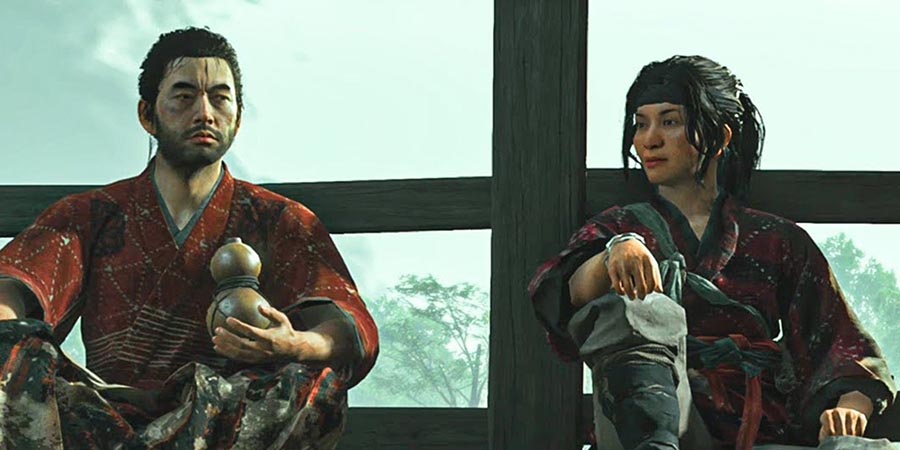
What Jin and Yuna’s Silence Actually Means
Both Jin and Yuna respond to Shimura’s moves with silence. From the outside, this can look like acceptance — as though they have received the verdict and submitted to it.
But silence in the face of a status correction does not necessarily mean submission. It depends on what the silence contains.
There is the silence of someone who has accepted the frame and collapsed into it — who feels the shame, believes the judgment, loses access to their own position. This silence is defeat. It is what happens when the hierarchical move lands and does its intended work.
There is also the silence of someone who has seen the move, recognized it for what it is, and declined to engage with it on its own terms. This silence communicates something different: I hear you, but I am not governed by this. It does not argue with Shimura’s authority, because arguing would itself be an acceptance of the frame — it would treat Shimura’s verdict as something that requires rebuttal. Instead, it simply doesn’t enter. The move is allowed to pass without finding purchase.
Jin, across the arc of the story, is growing out of Shimura’s authority structure. His silence in these scenes is closer to the second kind — the early stages of individuation from an authority figure whose approval no longer defines his position. He is not collapsing. He is becoming someone who no longer needs to win this argument, because he is beginning to understand that the argument itself is not one he is required to participate in.
Yuna’s silence is strategic. She has understood Shimura’s hierarchy instantly and she knows that defending herself would invite further humiliation. Her silence withholds the emotional response that the move was designed to produce. It is not submission. It is refusal to provide what the move was looking for.
What a Grounded Response Would Look Like
It’s worth considering what it would look like to respond to these moves from a place of genuine internal stability — not to provide a script, but to illustrate the difference between a response that exits the frame and one that stays inside it.
To Shimura’s Just like you trusted Ryuzo, a response from internal authority might be: I learned from Ryuzo. I still choose who I trust. Notice what this does: it acknowledges the past without treating it as a verdict. It doesn’t argue with Shimura’s interpretation. It simply restates the position from inside a different frame — one where the speaker’s judgment belongs to them rather than to the authority figure’s evaluation of it.
To Shimura’s Is that where you learned how to steal, a grounded response might be: It’s where I learned to survive. This response refuses the moral diminishment without escalating. It reframes the history without apologizing for it. It acknowledges the reality of the past — yes, survival sometimes required what it required — without accepting Shimura’s interpretation of what that means about the person’s character.
Neither response argues. Neither escalates. Both simply decline to inhabit the frame that was offered. The key is that they come from a position that isn’t moved by the status correction — from a sense of internal authority that doesn’t require Shimura’s validation and isn’t destabilized by his judgment.
That internal stability is not about having the right words. It’s a state — one that becomes available when the nervous system is no longer running the old rule that authority figures’ verdicts define reality.
The Shame Response and What It Means
For people who grew up with this pattern, the imagined response to just like you trusted Ryuzo is not usually the grounded one described above. It’s usually shame and silence — the specific combination of going blank, losing access to language, feeling the weight of the past failure settle in, and having nothing available to say.
That shame response is not a sign of weakness. It is the nervous system executing a protective program that it learned under conditions where the protective program was genuinely necessary. When a parent used exactly this move — invoking past mistakes to neutralize present confidence, again and again, until the nervous system learned to expect it and respond by collapsing — the shame response was adaptive. It prevented escalation. It reduced the punishment.
Watching Lord Shimura use the same move on Jin doesn’t just produce analytical recognition. It activates the same conditioned response that the original experiences installed. The body doesn’t distinguish between a fictional authority figure using the pattern and the real one who used it first. It responds to the pattern.
And the anger at a fictional character — the irritation that seems disproportionate — is partly the emotional charge from the original experiences finding an outlet through the fictional stand-in. The character is absorbing something that belongs to a real history.
This is not a problem to be resolved. It is actually useful information. The precision with which these patterns are recognized, the intensity of the response they produce — these point directly toward what the original experiences installed and what, slowly, is in the process of being updated. The recognition itself is part of the update: you can see the move now, name what it is, understand its function. That seeing is the beginning of no longer being governed by it.
Why These Stories Resonate So Specifically
Ghost of Tsushima is, at its thematic core, a story about breaking away from an authority figure who confuses control with legitimacy. Jin’s entire arc is the slow, painful process of outgrowing a father figure who cannot distinguish between honor and dominance — who has merged his hierarchical authority with virtue itself, so that any challenge to his authority is experienced as moral transgression.
That story resonates specifically and powerfully with people who grew up with narcissistic authority figures for an obvious reason: it is their story, told through a feudal Japanese setting with a katana in the protagonist’s hand. The psychological dynamics are the same. The inherited identity that must be outgrown. The authority whose approval was total and whose withdrawal was devastating. The gradual discovery that the authority’s verdict was never the whole truth about who the person is.
Noticing Lord Shimura’s moves with precision, feeling the irritation at his status corrections, recognizing the mechanism in a story set a thousand years ago — this is not overreading. It is accurate reading, performed with a depth of understanding that comes from personal experience of the dynamic.
The people who lived it see it most clearly. And that clarity, however uncomfortable, is one of the things that comes from surviving it.
The ability to recognize subtle power dynamics and status manipulation — in fiction, in relationships, and in real time — is often heightened in survivors of narcissistic family systems. Trauma-informed therapy can help work with the conditioned shame and silence responses these dynamics activate, gradually replacing them with the internal stability from which genuine non-engagement becomes possible.

Our Fact Checking Process
Articles are written based on lived experience and supported by research from psychology and trauma-recovery literature. Sources are reviewed to ensure accuracy and responsible presentation of information.Our Review Board
Content is created using trauma-informed principles and focuses on practical tools and insights for survivors of narcissistic abuse and complex trauma.