
Trained to Lose: How Childhood Survival Creates a Lifetime of Shrinking, Self-Sabotage, and Emotional Management

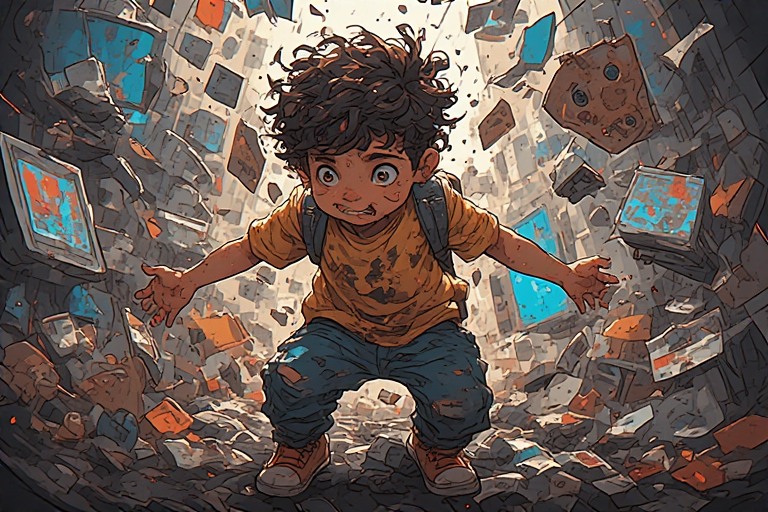
Most people assume trauma shows up as fear, panic, or overwhelm. But for many adult children of dysfunctional or emotionally abusive parents, trauma shapes itself in a much quieter form: a lifelong pattern of shrinking. You don’t break down—you step back. You don’t explode—you yield. And you don’t fight—you make yourself small to make others more comfortable.
For those who were scapegoated, parentified, or punished for having their own needs, one of the deepest survival strategies becomes this: I must lose to stay safe. It sounds extreme when said out loud, but for a child who learned that visibility brings danger, it becomes an unquestioned truth. This article explores how this pattern forms, how it shows up in surprising parts of life, and what it means when you begin to finally notice it.
The Survival Strategy You Didn’t Know You Had
Children in emotionally unstable households don’t consciously choose their coping strategies—they inherit them. When a parent reacts with anger, punishment, criticism, or withdrawal any time a child expresses autonomy, confidence, or frustration, the child learns to suppress those parts of themselves. Over time, survival becomes less about developing individuality and more about minimizing threat.
If you were scapegoated or parentified, this dynamic is even stronger. The family implicitly trains you to carry responsibility for the parent’s emotional climate. You become the “emotion manager,” the one who absorbs tension, smooths conflict, and keeps unstable adults calm. That is not kindness; it is survival. And it comes at a cost: your nervous system begins to equate self-expression with danger.
When Losing Becomes a Safety Mechanism
A child with a dominant or emotionally volatile parent internalizes rules that are never spoken but always enforced. Winning too easily, showing too much skill, or simply being competent can provoke criticism, guilt-tripping, mocking, or punishment. After enough repetitions, the child’s body learns a simple formula: being small is safer than being strong.
This conditioning doesn’t stay in the home. It migrates into every corner of childhood. It infiltrates friendships, school performance, hobbies, and sports. You may not even realize it’s happening because it becomes automatic—your nervous system makes decisions before your mind can catch up. That is why the examples that come to memory in adulthood often feel disturbing: they reveal how deeply ingrained the pattern truly was.
Childhood Moments That Were Never Just “Moments”
When you look back on certain memories—like karate drills, table tennis matches, or go-karting—you may initially view them as isolated incidents. In reality, they are emotionally coded snapshots of your survival system in action. In each scenario, your body wasn’t responding to a sport or a game; it was responding to the psychological rules of your home.
For instance, letting go of another child’s arm in karate wasn’t actually generosity or fairness. It was emotional management—softening the experience so the other person didn’t become upset, uncomfortable, or threatening. Letting your father win at table tennis wasn’t just kindness. It was a fawn response: a conditioned behavior designed to maintain safety in the presence of someone whose ego you had learned to protect.
Even pulling off the gas pedal during go-karting had an emotional logic. Staying ahead, outshining your father, or outperforming him would violate an unspoken household rule: don’t threaten the adult’s sense of power. These moments are not small. They are the fingerprints of trauma on everyday experiences.
The Psychological Logic Behind Self-Sabotage
One of the most revealing memories from your journal was the table tennis match against a skilled opponent. You started winning again after losing your composure, but instead of letting the game play out naturally, you sabotaged yourself. Why? Because somewhere deep inside, a primitive rule activated: “After showing emotion, I don’t deserve to win.”
This belief is formed in homes where children are punished, mocked, or shamed for emotional expression. If crying, frustration, or anger triggered negative responses from a parent, the child learns that emotion makes them “bad” or “unworthy.” Winning while feeling “unworthy” creates internal conflict, which the nervous system solves through self-sabotage. Losing becomes a way to restore internal safety.
This mechanism is not weakness—it is conditioning. It is the outcome of growing up in an environment where your emotional reality was treated as a threat rather than a normal part of being human.
Why This Pattern Follows You Into Adulthood
Trauma does not disappear simply because you grow up. Instead, it becomes a set of invisible behavioral codes that govern your adult life. Even long after leaving the environment that taught you these rules, the body still operates according to them. This is why so many adult children of dysfunctional families struggle with:
- hesitating before taking opportunities
- feeling guilty when they succeed
- downplaying accomplishments
- shrinking in the presence of confident people
- avoiding conflict at all costs
- letting others take the lead even when they shouldn’t
- sabotaging progress right when things get better
- believing their success will upset or threaten others
These behaviors are not personality traits; they are adaptations. They kept you safe as a child, and your nervous system sees no reason to abandon them without conscious work.
“How Many Times Have I Done This Without Realizing?”
This is one of the most unsettling questions people ask themselves once they begin to see the pattern. The truth is that you have probably done this thousands of times—not because you failed, but because you survived. These patterns operate below conscious awareness, woven into micro-choices you make throughout the day.
You may have chosen smaller roles, avoided competitive situations, given credit away, or stepped aside so others could feel more capable. You may have sensed tension in a room and shrunk automatically. You may have let someone take the spotlight because something inside you feared that shining would lead to conflict or abandonment. These patterns persist precisely because they once kept you safe.
The good news is that awareness begins to collapse the entire structure. Once you can see the pattern, you are no longer unconsciously controlled by it.
The Emotional Cost of Being Trained to Yield
When a child is forced to become emotionally responsible for a parent, the consequences are far-reaching. They learn to monitor other people’s moods, anticipate reactions, and avoid triggering anger or disappointment. This creates adults who are hyper-attuned to others but disconnected from themselves. It creates adults who can read a room instantly but struggle to identify their own needs.
More importantly, it creates a lifelong tension between who you are and who you were forced to be. The real self wants autonomy, expression, and growth. The survival self wants safety, predictability, and invisibility. This internal conflict often results in exhaustion, low self-worth, and a constant feeling of “holding back.”
Why You Were Not Allowed to Win
One of the most painful truths for many survivors to confront is this: your success was threatening to the adults around you. If you were scapegoated or parentified, your role in the family was fixed. You were the one who absorbed blame. You were the one who made things easier. You were the one who held emotional tension.
In these families, the child’s talent, independence, or confidence triggers the parent’s insecurity. As a result, the child learns that being competent leads to punishment, ridicule, or withdrawal. Over time, they come to believe that their very existence—when expressed authentically—hurts other people. And so they learn to dim themselves to protect the parent’s ego.
You Are Not Broken—You Were Overtrained
Many people fear that these patterns mean something is wrong with them. But the truth is the opposite: these patterns show how brilliantly your mind adapted to survive an environment that did not meet your emotional needs. Your nervous system prioritized safety above everything else, and it succeeded. That is not brokenness. That is resilience.
The adult struggle begins not because you are flawed, but because the survival strategies that kept you safe no longer fit the life you want. They are outdated software running on new hardware. They once protected you. Now they limit you.
Recognizing the pattern is the beginning of choosing a new path.
The Awakening: When Your Real Self Starts to Come Forward
The moment you begin to see the pattern is the moment it begins to dissolve. Awareness is not just insight—it is disruption. Once you name the survival rule (“I must lose to stay safe”), you create the ability to question it. You create the ability to pause before shrinking. You create the ability to resist the impulse to yield.
This is the start of reparenting yourself. It’s the beginning of reclaiming your right to take up space, to own your achievements, and to express your emotions without fear. And most importantly, it’s the start of living a life that belongs to you—not to the survival template you inherited.
You Are Early in Your Healing, Not Late
Healing from this kind of trauma is not about becoming a different person; it’s about reclaiming the parts of yourself that were never allowed to exist. The child in you learned to survive by shrinking. The adult in you is now learning to live by expanding.
You are not weak. You are not sabotaging yourself because you lack discipline. You are not avoiding conflict because you are afraid of life. You are simply following the rules that kept you safe when you had no power or protection.
Now you do.
And every moment of awareness—every time you catch yourself shrinking, yielding, or stepping aside—is a step toward freedom. You are not late in this journey. You are right on time. You are beginning exactly where healing begins: with truth, clarity, and the courage to finally see yourself.
Here is an interesting read, it is based on the conclusion many scapegoated children eventually arrive at: how suffering becomes a currency for safety.
