When “Tolerance” Is a Trap: How Narcissistic Family Systems Train the Scapegoat to Abandon Themselves

There is a sentence that lands differently for survivors of narcissistic families than it does for most people.
It goes like this: tolerance is weakness masked as virtue.
For someone who didn’t grow up in a toxic family system, that might sound cynical. Tolerance is generally considered a good thing.
But for someone who was raised inside a narcissistic family — and especially for the scapegoat — that sentence can feel like something cracking open. Because what they were taught as tolerance was never tolerance at all. It was submission dressed in moral language. Self-abandonment sold as maturity. And recognizing that distinction is one of the more unsettling and liberating moments available in recovery.
What Children in These Families Are Actually Taught
In narcissistic family systems, children receive a consistent message about what it means to be good.
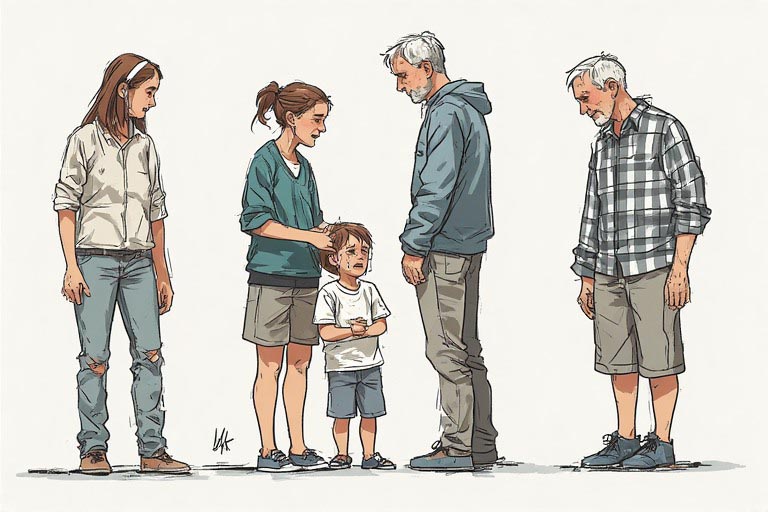
Being good means staying quiet. Being mature means doing nothing. Being wise means giving in. The exact words vary — just be the bigger person, don’t escalate, let it go, be kind — but the underlying instruction is always the same. Keep the narcissistic parent calm. Even if it costs you.
This is not moral teaching. It is appeasement conditioning (the fawn response).
Children learn that their own instincts, boundaries, and internal signals don’t matter — and worse, that acting on them is a form of moral failure. The child who speaks up when something is wrong isn’t brave. They’re difficult. The child who stays silent isn’t compliant. They’re mature.
Over time, this rewires the relationship between self-protection and virtue. The child learns to feel ashamed of their own self-preservation reflex. And they carry that shame into adulthood.
Another key trauma behaviour that forms is an intense fear of disappointing others. This can paralyze because any action the child takes is met with criticism.
The Enabling Parent’s Role
In most narcissistic family systems, there is an aggressive parent and an appeasing one. The appeasing parent has often learned to survive through placation — smoothing conflict, minimizing problems, never pushing back. And they teach the child to do the same.
But here’s the important part: they don’t teach this to protect the child. They teach it to protect themselves.
When the child pushes back against unfair treatment, or tries to assert their own needs, the enabling parent rushes in. Just give in. Don’t start something. You’re the bigger person. What they are really saying, underneath the moral language, is: if you resist, I will bear the consequences of his anger. The child’s safety is secondary to managing the narcissist’s mood.
This turns the child into something specific. A buffer. A peacekeeper. A shield that absorbs the parent’s rage so everyone else can stay comfortable. And because it is wrapped in the language of virtue — maturity, kindness, tolerance — the child internalizes it as identity. I am a good person if I let myself be harmed.
It is one of the most insidious forms of conditioning, precisely because it feels like a moral instruction rather than a survival imposition.
The Enabling Parent Is Not Innocent
This is a painful truth that survivors often reach slowly, and it deserves to be stated plainly.
The enabling parent may genuinely be a victim of the narcissist. They may be exhausted, frightened, psychologically broken. These things can all be true. Understanding them matters.
But understanding is not the same as excusing. A parent’s first instinct is supposed to be the protection of the child — even at cost to themselves. When a parent instead sacrifices the child to maintain their own safety, the system has inverted itself in a fundamental way.
Enabling parents often silenced the child to keep the narcissist calm. They invalidated the child’s experience. They enforced the narcissist’s rules. They taught the child that the narcissist’s emotions mattered more than the child’s safety. And they denied or minimized the abuse when the child tried to name it.
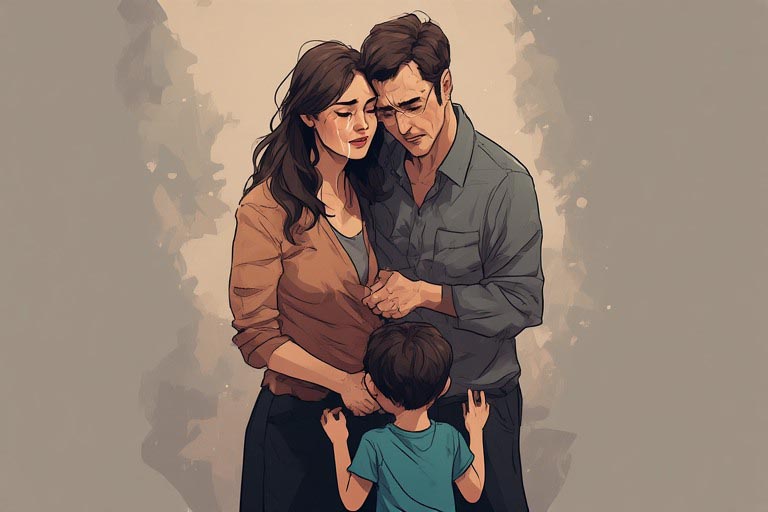
The scapegoat eventually arrives at one of the most difficult recognitions in recovery: that both parents, in their different ways, chose the family system over the child. The narcissist through aggression. The enabler through compliance. The result for the child was the same.
Holding the complexity of this — understanding the enabling parent’s suffering while not erasing your own — is some of the deepest work in trauma recovery. It is possible to grieve what you needed and didn’t get from someone while also seeing clearly what they chose.
When Virtue Gets Used as a Weapon
One of the hardest things to unpack is the way moral language was deployed against the child’s own instincts.
When silence is called maturity, when submission is called kindness, when obedience is called intelligence, when tolerance is called moral strength — the child learns to feel shame whenever they defend themselves. The moral code they’re given is designed not to help them navigate the world but to protect the family hierarchy. It disconnects them from their instincts, their anger, their sense of injustice, and their basic self-protective reflex.
This is why adult survivors ask questions that seem strange from the outside. Why do I freeze when I need to act? Why do I feel guilty for saying no? Why does my anger feel wrong even when it’s obviously justified? Why do I collapse in conflict even when I’m clearly in the right?
Because they were taught, with moral authority, that self-protection is wrong.
The conditioning is not just behavioral. It is ethical. The child was trained to believe that abandoning themselves was the virtuous choice.
The Anger That Comes Later Is Actually Healing
When survivors finally see this clearly — when the full picture assembles itself and the conditioning becomes visible for what it was — there is usually anger.
Not explosive, destructive anger. Something cleaner and more grounded than that. The anger of someone who finally understands what was done, and who will not accept it any longer.
This anger is healthy. It is the nervous system’s appropriate response to injustice that was previously suppressed. It says: what happened to me was wrong. I deserved protection. My instincts were right. I will not betray myself again.
This is not anger that harms. It is anger that restores. It is what begins to rebuild boundaries, return dignity, and reawaken the self that was trained into silence.
A lot of recovery work involves learning to trust this anger rather than rushing to suppress it again. The conditioning installed the belief that anger is dangerous, that assertiveness is aggression, that self-protection is selfishness. The work is the slow reversal of those equations.

You Were Trained to Abandon Yourself
Every survivor of scapegoat conditioning eventually arrives at some version of the same realization.
I was taught to override my instincts. I was taught to silence my voice. I was taught to ignore my own signals. I was taught to collapse instead of act, to tolerate what hurt me, to prioritize other people’s comfort over my own safety — and to call all of it virtue. And to feel guilty when I didn’t comply.
This is the psychological center of the whole system. And recognizing it — really seeing it, not just intellectually but feeling its truth — is the beginning of reclaiming the self that was organized around these instructions.
Healing, in this context, is not primarily about developing new skills. It’s about undoing a false moral code. It’s about learning to trust the instincts that were trained out of you. It’s about restoring access to anger, voice, and self-protection that were treated as vices.
Here are 10 self limiting beliefs that naturally develop from being inside these dynamics.
What Changes After This Realization
The change is gradual. It happens in specific moments rather than as a single transformation.
The first time you say no without explaining yourself afterward. The first time you stop minimizing your own pain to make someone else comfortable. The first time you trust an instinct that your conditioning tells you is wrong. The first time you protect your time or your space without guilt.
Each of these moments is small. Each one is also a direct reversal of what you were taught. And they accumulate.
You are not weak. You were conditioned to be compliant. Those are not the same thing. One is a character trait. The other is the outcome of a specific developmental environment that needed you to behave in a specific way to function.
The moment that distinction lands — really lands, in the body rather than just the mind — is the moment the conditioning begins to lose its grip.
You were not flawed. You were trained. You were not broken. You were silenced. And what was trained can be unlearned. What was silenced can speak again.
The dynamics described here — tolerance conditioned as self-abandonment, enabling parent complicity, and the reversal of self-protection instincts — are central features of narcissistic family systems. Trauma-informed therapy, particularly approaches that work with the nervous system and deeply held beliefs, can help survivors reclaim the instincts and voice that this conditioning suppressed.