
Why Success Can Feel More Terrifying Than Failure
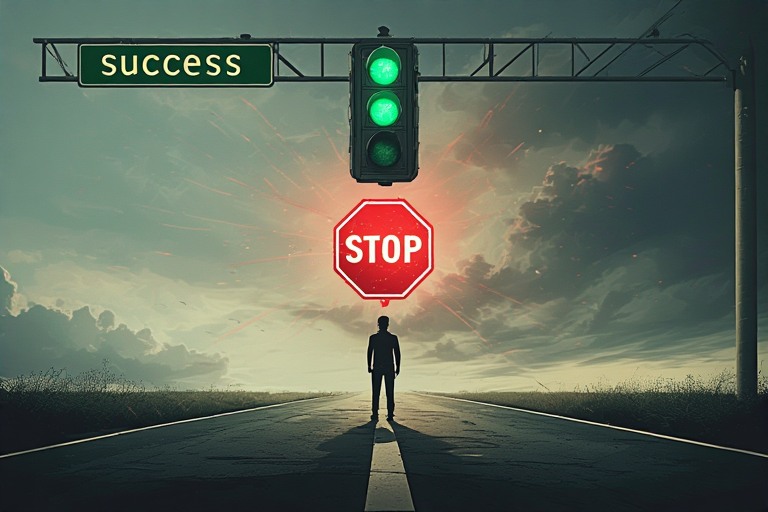
Most people assume that fear of failure is the thing that holds people back.
But there’s a quieter, more confusing pattern that doesn’t get nearly as much attention — and for some people, it’s far more disruptive.
It’s the fear of things going well.
Not failure. Success. The good thing arriving, the effort finally working, the possibility becoming real — and the body responding not with relief or excitement, but with dread.
If that sounds irrational, it is. Rationally. But the nervous system doesn’t operate on rational logic. It operates on pattern recognition. And for people who grew up in certain environments, success was reliably followed by something bad. So the nervous system learned to treat the arrival of good things not as a green light, but as a warning signal.
This post is about that pattern — what it looks like, where it comes from, and why it has nothing to do with self-sabotage in the way that term is usually meant.
What It Actually Feels Like
It’s easier to understand this pattern from the inside, so let me describe it as concretely as I can.
Something starts working. A project gains traction. A relationship shows real promise. An effort that has felt futile suddenly shows signs of life.
And instead of feeling good, the first sensation is something closer to unease. A tightening somewhere in the body — the chest, the throat, the stomach. A vague but urgent sense that something bad is coming. The mind starts scanning: what’s about to go wrong? Who’s going to take this away? What will I have done wrong when this falls apart?
Alongside this is a specific inability to claim the good thing. It can’t be acknowledged. It can’t be rested into. There’s a rule that operates just below conscious thought: you cannot allow yourself to believe this is real until an arbitrary amount of time has passed and nothing has gone wrong yet. And even then, the permission is tentative. Always tentative.
There are also flickers of genuine excitement — moments where the mind breaks through and imagines what it would actually mean if this worked. The future that could open up. The freedom, the autonomy, the daily life that becomes possible. These flickers are real and they’re powerful.
And they’re immediately followed by a particular kind of dread. Not just worry that it won’t work out. But the vivid, embodied anticipation of collapse — of being left alone in the wreckage of something hoped for, with no one there and nothing to hold onto.
This Is Not Fear of Success
The term “fear of success” gets used a lot, but I think it misnames what’s actually happening.
People who experience this aren’t afraid of success itself. They’re not reluctant to win. They’re not secretly comfortable with struggle because struggle feels safe in some cozy way.
What they’re afraid of is what has historically followed when things went well.
For some people — particularly those who grew up in environments where a parent felt threatened by their child’s happiness, autonomy, or achievement — positive states were genuinely unsafe. Joy made you visible. Confidence made you a target. Success at something could trigger criticism, punishment, withdrawal of love, or a sudden shift in the emotional atmosphere of the home.
In that environment, the nervous system draws a logical conclusion: good things are the setup for something bad. And it builds a reflex accordingly.
So now, when something works, the system doesn’t experience a green light. It experiences the specific anxiety that precedes the punishment it learned to expect.
That’s not fear of success. That’s fear of what always followed success before. And it’s a completely different problem — with a completely different solution.
And this pattern extends to all areas of life. In this post I explain how why asking for more money can feel terrifying in a job.
The Hope Problem
There’s a layer underneath this that’s worth naming separately, because it’s particularly painful.
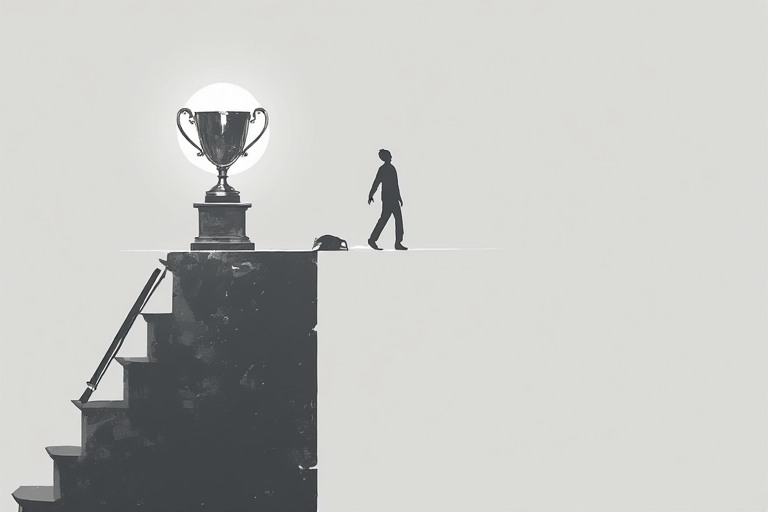
Hope itself becomes dangerous.
When positive expectations have been followed, repeatedly, by disappointment, abandonment, or punishment, the nervous system starts to treat hope as a liability. Not just cautious optimism — but the very act of allowing yourself to imagine something good, to want it, to let yourself feel what it might mean.
Hope becomes the setup for devastation.
So the mind develops a protective move: shut down the imagination before it gets too far. Touch the possibility of something good, briefly, and then immediately close it off. Don’t let yourself want it. Don’t let yourself picture it. And above all, don’t let yourself feel the excitement, because feeling the excitement means you’ve become vulnerable to losing it.
This explains the pattern of fleeting excitement followed immediately by suppression. It’s not inconsistency or ambivalence. It’s a protection mechanism — learned from experience — against the specific pain of hoping and then being left alone in the aftermath.
The cruelest part of this is that the protection itself prevents anything from building. You can’t invest in something you won’t let yourself believe in. You can’t build on a foundation you keep backing away from.
The Collapse Fear
The fourth piece of this pattern is the one that tends to live deepest in the body.
It’s not just fear that the good thing won’t last. It’s something more specific: the anticipation of being alone in the wreckage when it ends.
This tells you something important about the original wound. The pain being anticipated isn’t just failure. It’s failure plus abandonment. It’s the thing not working out, and then having no one there. No repair. No support. Just the rubble, and the aloneness inside it.
That specific combination — collapse plus isolation — is what trauma imprints most deeply. And once it’s in the system, any situation that carries a risk of collapse also carries the ghost of that aloneness. Which makes the stakes feel existential in a way that’s genuinely hard to explain to people who haven’t experienced it.
This is why the fear is so disproportionate to the actual situation. Objectively, a project failing is disappointing. Subjectively, for someone carrying this, it feels like the reactivation of something much older and much more devastating.
This can be related to another issue from childhood, when support comes with a threat attached. Many people learn to fear being helped.

Why the Body Speaks First
One of the reliable signs that this pattern is active is that the body responds before the mind has time to analyze anything.
A throat tightening when success is mentioned. A chest constriction when something good is acknowledged. A wave of anxiety at the thought of a project working, of becoming visible, of reaching for something that matters.
These somatic responses aren’t irrational. They’re the body accurately reporting the survival rule it learned: visibility plus success equals danger. The throat constricts because visibility once felt genuinely unsafe. The chest tightens because good things once reliably preceded bad ones.
The body is telling the truth about its history. It just hasn’t updated to the present yet.
The Real Work
The conventional response to self-sabotage — and this pattern often gets labeled as self-sabotage — is some version of “push through it.” Recognize the pattern, challenge the thoughts, force yourself to take action anyway.
That approach misses the level where this actually lives.
The nervous system doesn’t update through willpower or intellectual understanding. It updates through experience. Specifically: through repeated experiences of good things that are not followed by punishment. Small, manageable successes that are allowed to exist without catastrophe arriving. The gradual accumulation of evidence that the old rule — success equals danger — is no longer true.
This is slow work. It can’t be hacked or bypassed. But it is the actual work that changes the underlying pattern, rather than just managing the symptoms of it.
It also helps enormously to name what’s happening in real time. When the throat tightens at the thought of something working, the question isn’t: why am I so broken? It’s: what did my nervous system learn about moments like this? And then, with that understanding in place: is that old rule actually true right now?
Not forcing a different answer. Just introducing the question.
You Are Not Sabotaging Yourself
If you recognize yourself in this, one thing I want to say clearly:
This is not self-sabotage. Not in the way that term implies — as though some part of you is deliberately and perversely undermining your own happiness because you prefer to suffer.
What’s actually happening is that your nervous system is doing its job. It learned a specific set of rules about what happens when things go well. It’s applying those rules to protect you from outcomes it knows can be devastating. It is, in its own way, trying to keep you safe.
The problem isn’t that your system is broken. The problem is that it’s still running very old software — software that was written in circumstances that no longer exist, for a version of the world that may have been accurate then but isn’t now. I go into detail here describing how certain nervous systems were trained to lose. Here is another article that explains how narcissistic parenting creates learned helplessness as an automatic habit.
Updating that software takes time, support, and the kind of slowly accumulated safety that allows the nervous system to risk believing something different.
But it does update. That’s not a reassurance — it’s what the research shows, what the clinical evidence shows, and what many people who’ve done this work discover for themselves.
The fear of good things is not a permanent feature of who you are. It’s a learned response to a specific kind of history.
And learned responses can change.
If you recognize this pattern in yourself — the inability to rest in good things, the anticipation of punishment, the fear of hope — trauma-informed therapy, particularly EMDR and somatic approaches, addresses these patterns at the nervous system level where they actually live.

When Something Starts Working — And You Immediately Make It Harder to Do
There’s a specific moment that many people in trauma recovery recognize, even if they’ve never had language for it.
Something shifts. A project starts gaining traction. An effort that felt pointless suddenly shows signs of life. Someone notices. Something connects.
And within days — sometimes hours — the thing that was easy becomes difficult. The thing you did naturally, because you enjoyed it, now requires perfect conditions. You need to be rested, focused, in the right headspace, fully optimal. The casual evening habit becomes a high-stakes performance. The playful experiment becomes something you can only approach when you’re operating at 100%.
Nothing external changed. But everything internal did.
I talking here about that shift — what’s causing it, and why it’s one of the more insidious ways trauma interferes with building a life.
The Missing Template
Here’s something worth sitting with: most people who grew up in stable, supportive environments have an emotional template for what success feels like.
It goes something like this — something works, you feel relief, then satisfaction, then a quiet pride, then you relax into it. You absorb it. You let yourself feel, for a moment, that you did something good and that it’s real. And then you move forward from that solid ground.
That template is not universal. It has to be taught — not through instruction, but through repeated experience. Through having achievements witnessed and reflected back to you. Through being allowed to feel proud without that pride being punished, dismissed, or converted into a new demand. Through learning, in the body, that good things can simply be good.
For people who didn’t receive that — whose achievements were met with criticism, indifference, or an immediate raising of the bar — the template never got built. And in its place, a different one formed.
In that alternative template, achievement is not followed by relaxation. It’s followed by vigilance. The window of danger opens. The scanning begins. The waiting for whatever comes next, because in the experience that built the template, something always came next.
So even when something genuinely good happens, the nervous system doesn’t settle. It braces. And the achievement gets dismissed and moved past as quickly as possible — not because it doesn’t matter, but because staying with it feels unsafe.
This is not a character flaw. It’s a missing developmental experience. And missing experiences can be built, later in life, even if the process is slow and unfamiliar.

Keeping the Dream Alive by Not Touching It
The second pattern is subtler and worth naming carefully, because it looks like procrastination from the outside but is something quite different underneath.
When something has genuine potential — when it might actually work — there’s a particular protective move the nervous system can make: don’t fully engage with it.
The logic, operating just below the surface, runs something like this: as long as I haven’t fully committed, as long as I haven’t gone all in, the possibility is still alive. If I stay at the edge of it, I can keep the dream intact. But if I step fully in and it fails, I lose both the thing and the hope of the thing. And that loss, with all the aloneness it carries, is what the system is most afraid of.
So the delay isn’t laziness. It’s grief prevention.
It’s the nervous system trying to protect you from a specific kind of loss it has experienced before — not just disappointment, but the devastating combination of hope and then collapse and then nothing. No support. No repair. Just the empty aftermath of something that mattered.
Understanding this doesn’t make the delay disappear. But it changes what the delay is. It’s not evidence of not wanting the thing badly enough. It’s evidence of wanting it almost too much — and being terrified of what losing it would cost.

The Moment Play Becomes Performance
Here’s where the pattern gets most concrete.
You’re doing something because you enjoy it. Not because you’re trying to build something from it, not because you’re optimizing for an outcome, just because it genuinely interests you and you find yourself doing it in the evenings when you have energy.
Then something shifts — someone points out it’s working, or you start to see potential in it, or the thought arrives that this might actually lead somewhere.
And suddenly, the thing you did naturally becomes a thing you can only do when you’re at full capacity. You need to be rested. You need to be focused. You need to be in exactly the right state, or you might do it wrong, waste the opportunity, make a mistake that costs you something you can’t afford to lose.
What happened?
The nervous system reclassified the activity. Before, it was play — low stakes, no threat, just engagement. But now that it carries potential, it also carries risk. And the system, trained to associate success with danger, responds to risk the way it always has: with performance anxiety, hypervigilance, and the demand for perfect conditions before proceeding.
This is why people sometimes find that the moment a hobby becomes a career, they stop being able to enjoy it. Or why a casual creative practice becomes agonizing the moment it becomes visible. The activity itself didn’t change. What changed is the threat level the nervous system assigned to it.
And once something becomes high-stakes internally, the bar for engaging with it rises to impossible heights. Suddenly you need to be optimal to do the thing that used to be easy. And since optimal conditions rarely arrive, the thing doesn’t get done. Which looks, from the outside, like avoidance. Which then generates shame. Which makes engaging even harder.
Here is an interesting read on performance pressure, and how some people never relax at work.
What Perfectionism Is Actually Doing Here
Perfectionism gets talked about a lot, usually in terms of setting unrealistically high standards. But in this context, it’s doing something more specific.
When success feels dangerous, perfectionism becomes a delay strategy. If the bar for proceeding is impossibly high — if you can only do this when you’re completely rested, completely focused, completely optimal — then you will rarely proceed. And not proceeding keeps you safe from the exposure that success brings.
This isn’t conscious. Nobody thinks: I will set an impossible bar for myself so that I never have to be vulnerable to success and what follows it. But the nervous system finds its way to the same outcome through a different route: I need to do this right, which means I can only do it when conditions are perfect, which means I often can’t do it at all.
The cruel irony is that perfectionism, which presents itself as caring deeply about quality, is sometimes most active in protecting the person from the thing they care most about.
The Difference Between Then and Now
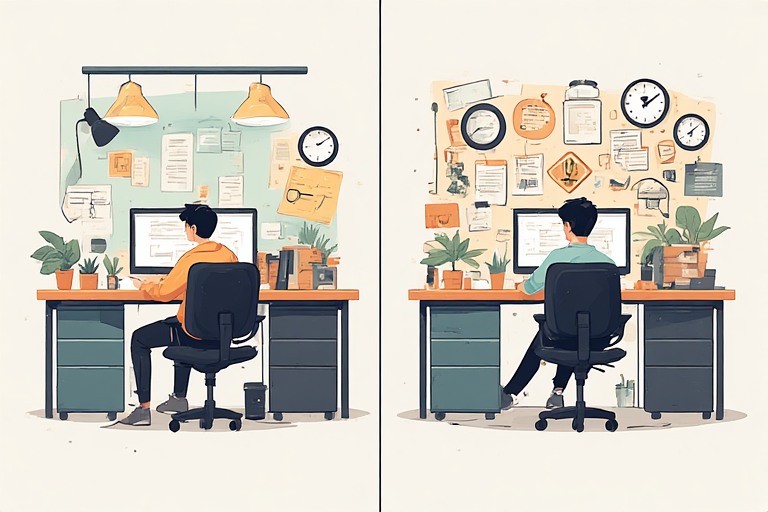
One of the most useful things you can do when you notice this shift — from easy to effortful, from natural to requiring perfect conditions — is to ask a simple question:
What changed?
Not in the task. Not in your capacity. But in what the task now means.
Because if the answer is “someone said it’s working” or “I started to think this might actually lead somewhere” — that’s information. That tells you the shift isn’t about the task at all. It’s about what success would mean, and what your nervous system has learned to expect when things start going well.
Naming that in real time is genuinely useful. Not because naming it makes the anxiety disappear, but because it interrupts the shame spiral. You’re not suddenly bad at the thing. You’re not suddenly lazy or avoidant or broken. Your nervous system encountered a success signal and responded the way it always has — with vigilance, protection, and an attempt to raise the bar high enough to stay safe.
That’s a nervous system doing its job. Just with outdated instructions.
A Different Way to Approach It
The instinct when you notice this pattern is often to try to override it — to force yourself to engage anyway, to push through the resistance, to just do the thing regardless of how ready you feel.
That sometimes works in the short term. But it tends to reinforce the underlying dynamic, because it confirms to the nervous system that this is something that requires force. It takes the activity further from play and deeper into performance.
A different approach is to deliberately lower the stakes — not by caring less about the outcome, but by deliberately reducing the conditions required to engage. Not optimal, not perfect, not fully rested. Messy. Partial. Good enough. Allowed to be whatever it is today.
This is not about producing worse work. It’s about sending the nervous system a different signal: this is not a threat situation. This is play. We are allowed to be here without everything being perfect.
Small, imperfect, regular engagement tends to do more to update the nervous system’s threat assessment than occasional perfect performances. Not because the quality doesn’t matter, but because the consistency matters more — and consistency requires that the bar for engagement be low enough to actually clear.

What’s Really Being Protected
Underneath all of this — the delay, the perfectionism, the sudden difficulty — is something worth naming directly.
Something that matters is being protected from loss.
The more something means to you, the more the nervous system will try to keep it in the realm of possibility rather than exposing it to the risk of reality. Because possibility can’t be taken away. Reality can.
And if your history taught you that the things you cared about most reliably ended in collapse, with no support on the other side — then the protection makes complete sense. The nervous system isn’t trying to sabotage you. It’s trying to keep something precious safe in the only way it knows how.
The work is in slowly, carefully learning that engaging fully with something you care about does not inevitably lead to devastation. That you can want something, reach for it, and even lose it — and survive the loss without falling apart.
That learning doesn’t come from being told. It comes from experience. Small experiences, accumulated over time, that gradually build a different kind of evidence.
That process is slower than most people want it to be. But it’s the actual path through.
If you notice that the things you care most about become the hardest to engage with — and that success signals tend to trigger anxiety rather than relief — this is a pattern that trauma-informed therapy can help address at the level of the nervous system, where it actually lives.

Our Fact Checking Process
Articles are written based on lived experience and supported by research from psychology and trauma-recovery literature. Sources are reviewed to ensure accuracy and responsible presentation of information.Our Review Board
Content is created using trauma-informed principles and focuses on practical tools and insights for survivors of narcissistic abuse and complex trauma.