Why Manipulators Leave Certain People Alone (And What Those People Have in Common)
If you’ve ever watched a manipulative person in action, you might have noticed something interesting.
They don’t target everyone equally.
Some people get poked, provoked, and undermined regularly. Others seem to be quietly left alone. The manipulator circles them, maybe tests the water once, and then moves on.
It’s not random. There’s a consistent pattern in who gets targeted and who doesn’t.
And once you see it, it changes how you think about the whole dynamic.
The Question Red Dead Redemption 2 Asks Without Asking
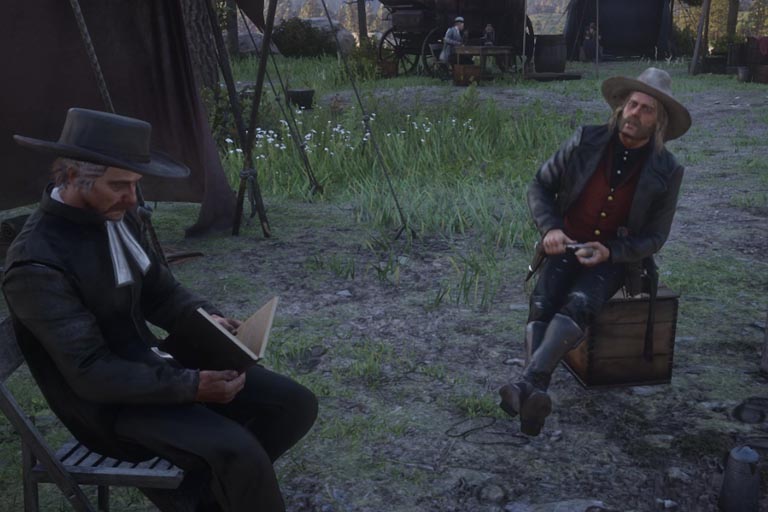
In RDR2, Micah Bell is a precise study in how a certain kind of person operates.
He targets Abigail. He goes after Susan. He pokes Bill and Uncle. But watch what he does around Arthur Morgan, Hosea Matthews, and Charles Smith.
He’s different. Quieter. More careful.
He doesn’t leave them alone because he respects them in any conventional sense. He leaves them alone because they don’t give him what he needs. Which is a reaction.
That distinction is everything.
Why Some People Are Easy Targets
The people Micah goes after have something in common.
They still need something from the group. Abigail needs her position as a mother to be respected. Susan needs her authority acknowledged. Bill needs his masculinity to be taken seriously.
These are real things to need. They’re not weaknesses in the moral sense. But they are openings. Points of emotional access.
When Micah pokes at them, they respond. They defend, explain, justify, react. That response is the payoff. That’s the regulation he’s after.
No reaction means no reward. And people who don’t react don’t stay interesting to manipulators for long.

What Arthur, Hosea, and Charles Actually Do
Here’s the thing that surprises people when they look closely.
These characters aren’t immune because they’re tougher. They’re not immune because they’re aggressive, or cold, or intimidating.
They’re immune because they don’t need the interaction to go a certain way.
Hosea doesn’t need Micah to back down. He doesn’t need to win. He responds slowly, sometimes with humor, and then moves on. There’s no urgency in him. Nothing to hook.
Charles barely engages at all. Not out of hostility. He just doesn’t offer emotional access automatically. You don’t know what he’s insecure about, because he doesn’t perform his insecurities.
Arthur doesn’t chase approval. He tolerates discomfort without rushing to resolve it. If Micah says something sharp, Arthur might acknowledge it, but he doesn’t scramble. He doesn’t overexplain.
These responses kill the game. There’s nothing to escalate against.
The Psychological Rule Underneath All of This
People like Micah — and people like him in real life — are unconsciously scanning for specific signals.
They’re looking for approval-seeking. Self-doubt. Emotional urgency. The desire to be understood and respected. The need to have the group’s positive verdict.
Those signals mean: this person can be moved.
The people they leave alone project something different. Calm certainty. Slow reactions. A sense that their identity isn’t up for negotiation in this interaction.
Attacking someone like that is risky. If the attack lands on nothing, the manipulator looks weak. So they don’t try.
This is why it’s not about being stronger or tougher. It’s about not being available for emotional extraction.
Self-Contained vs Outsourcing Your Stability
There’s a phrase that describes what the untouchable characters have: self-contained emotional regulation.
They don’t outsource their sense of okay-ness to the interaction. They’re not relying on the conversation going well in order to feel okay about themselves. Their stability doesn’t depend on how the other person responds.
Compare that to someone who needs the conversation to go a certain way. Who needs the other person to understand them, respect them, back down, acknowledge they were wrong. That dependency is the lever.
A manipulator doesn’t need to defeat you. They just need to find the thing you need from the interaction. And once they find it, they can use it.
Why This Matters Beyond Fiction
The reason RDR2 scenes like this are useful isn’t that they teach tactics. It’s that they make visible something that’s very hard to see when you’re inside it.
When someone is provoking you, the instinct is to figure out what to say back. How to defend yourself. How to win the exchange.
But the characters who don’t get targeted aren’t winning exchanges. They’re not playing.
They’re not trying to defeat Micah. They’ve just become uninteresting to him as a target.
That shift — from trying to win to not being hookable — is a completely different goal. And it’s a more realistic one.
You can’t always find the perfect response. But you can get better at not handing over the emotional reaction that makes you worth targeting in the first place.
What This Actually Looks Like to Build
Nobody wakes up with Hosea Matthews’ calm. It’s built over time.
Part of what makes the characters in this game feel settled is that they know who they are. Their identity isn’t being decided moment to moment based on what other people think. It’s more fixed than that.
For people who grew up in environments where their identity was constantly questioned, criticized, and defined by others, that stability wasn’t allowed to form. The self is still partly dependent on external verdicts. Which means the manipulator still has access.
Building internal stability — the kind that doesn’t require the other person’s approval, that doesn’t collapse when someone takes a shot — is slower work than learning a response. It happens through therapy, through accumulating safe relationships, through the nervous system slowly learning that its position doesn’t shift every time someone tries to move it.
The goal isn’t to become cold or unreachable. It’s to become someone whose sense of themselves doesn’t live in the interaction.
When that happens, the Micahs of the world lose their leverage. Not because you defeated them. Because you stopped being interesting to target.
The internal stability described here — not needing the interaction to go a certain way in order to feel okay — is one of the outcomes of healing from developmental trauma. It builds slowly, through accumulated experience of having a stable internal ground that doesn’t shift under social pressure. Trauma-informed therapy works directly toward this.