When Everyone Denies It: How Family Systems Make You Question Your Own Reality
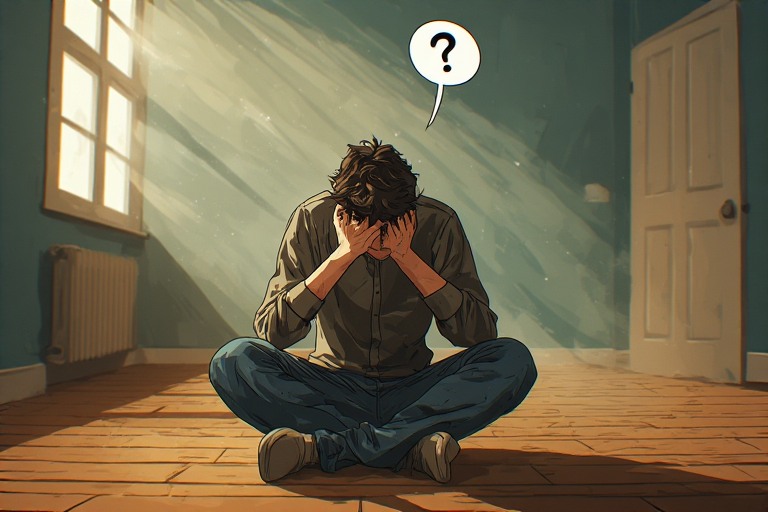
There’s a particular fear that surfaces in recovery from narcissistic family dynamics that doesn’t get talked about enough.
It’s not the fear of confrontation exactly. It’s something more fundamental than that. It’s the fear that your reality itself might not be real — that if the people who were there look you in the eye and say it didn’t happen, or that it was your fault, or that you’re imagining things, something about your own experience will disappear. That their collective denial will somehow be more solid than your own memory.
This fear can feel irrational, embarrassing, difficult to admit. But it makes complete sense once you understand what created it. It wasn’t born from weakness or confusion. It was the logical output of spending years inside a system that operated by rewriting reality — and that had the numbers to make the rewrite stick.
Table of Contents
- Gaslighting at the System Level
- How Each Family Member Defends the System
- Why You Stand Alone in the System
- The Fear That Reality Will Disappear
- Understanding Does Not Require Their Agreement
- Your Reality Is Not Disappearing
Gaslighting at the System Level
Most people have heard the term gaslighting used to describe what happens between two individuals — one person systematically manipulates another into doubting their own perception. But in dysfunctional family systems, something more structural can occur.
When an entire family organizes around protecting a particular version of events, gaslighting becomes systemic. It isn’t just one person rewriting reality — it’s everyone. The father who denies and attacks. The mother who deflects and assigns blame. The sibling who dismisses and minimizes. The extended family member who enforces hierarchy without ever acknowledging that a hierarchy exists.
Each of these responses, taken alone, might be manageable. But experienced together, from every direction, they produce a specific kind of psychological pressure: the sense that you are the only person in the room who sees what you see, which gradually starts to feel less like being right and more like being wrong in a way you cannot yet identify.
The child growing up inside this system doesn’t know it’s a system. They just know that whenever they name something uncomfortable, the group responds with denial. Whenever they try to describe their experience, the family presents a counter-narrative and everyone agrees with the counter-narrative except them.
Over years, this produces a rule the nervous system installs without conscious input: reality must be approved by the group. If the group rejects your experience, maybe it isn’t real.
This rule, installed in childhood, doesn’t get left behind when you leave home. It travels with you. Which is why, decades later, the anticipation of family denial can produce genuine terror — not just social discomfort, but the deep, destabilizing fear that contact with the group will dissolve something essential.
How Each Family Member Defends the System
It’s worth naming what system protection actually looks like in practice, because it rarely presents itself as conscious coordination. Each person seems to be reacting individually. But the effect, when you step back, is a unified wall.
The father who immediately attacks any statement that implicates him isn’t necessarily thinking strategically. He’s protecting his self-image, which happens to align perfectly with protecting the family narrative. His response is: your version is wrong, and here’s why you’re the problem.
The mother who responds to her child’s described pain by explaining that the child brought it on themselves is doing something similar. She’s maintaining her own position in the system by refusing to occupy the role of someone who allowed harm. Her response is: this isn’t what you think it is, and to the extent that anything happened, it was your choice.
The sibling who says you’re living in the past, or reading too many books, or that you should just forget about it — is performing a kind of intellectual dismissal that doesn’t engage with the content at all. There’s no argument about whether what you’re describing is accurate. The topic itself is being declared inadmissible.
The extended family member who subtly maintains hierarchy without ever naming it — who consistently places you at the bottom through small acts of dismissal or deference to others — is enforcing the group’s structural arrangement in a way that’s almost impossible to directly address, because it’s covert enough to always be deniable.
Separately, these might each be manageable. Together, they constitute a closed system with one operating rule: the system must not be questioned. And anyone who questions it will be met with denial, minimization, blame, and hierarchy enforcement until they stop.

Why You Stand Alone in the System
One of the most painful realities for people who grew up as the scapegoat in these family systems is the aloneness of the position.
Not ordinary aloneness — the kind that comes from being geographically distant from family or having grown apart. But a specific structural aloneness: you are the only person in the system whose role requires seeing what everyone else is committed to not seeing.
The scapegoat is, by function, the one who holds the family’s disavowed reality. They carry the awareness of the dysfunction precisely because they were the most directly affected by it, and because their role as the identified problem brought them into repeated contact with the most uncomfortable aspects of the system. They know because they were made to know, in a way others weren’t.
This means that within the family system, you will always be alone in your perception. Not because your perception is wrong. But because everyone else’s psychological survival depends on not sharing it.
For a parent to acknowledge the harm, they would have to revise their entire self-conception. For a sibling to acknowledge the scapegoating, they would have to revise their understanding of their own privileged position within the system. For extended family members to see the hierarchy, they would have to question their participation in it.
These are enormous revisions to ask of people who were never forced to make them. Most people don’t make them voluntarily.
So you stand alone. And that aloneness can feel, from the inside, like evidence that you’re wrong. Surely if it were really that bad, someone else would see it. Surely if your perception were accurate, it would find some confirmation somewhere in the system.
But this logic has it backwards. The fact that no one in the system confirms your perception isn’t evidence against it. It’s evidence of how thoroughly the system is working.

The Fear That Reality Will Disappear
Here’s the specific mechanism that produces the fear of disappearing reality, because it’s worth naming precisely.
If you grew up in an environment where your perception was routinely challenged and overridden by the group, your nervous system learned something that made sense at the time: external confirmation makes reality solid. External challenge makes it uncertain.
This is not how reality actually works, of course. Reality doesn’t become less real because people refuse to acknowledge it. History is full of examples of abuse, injustice, and dysfunction that were denied by everyone around the person experiencing them — and that were nonetheless completely real.
But the nervous system doesn’t operate on philosophical principles. It operates on learned rules derived from repeated experience. And if the repeated experience was that your reality collapsed under group pressure — that you started doubting yourself when the family presented their counter-narrative — then the nervous system will produce that same doubt automatically whenever group pressure is anticipated.
So the fear isn’t irrational. It’s a memory. The nervous system is accurately recalling what happened every other time the family challenged your perception. And it’s anticipating the same outcome.
What it hasn’t yet learned — because the experience hasn’t yet accumulated — is that adult reality is different. That you now have access to your own history in a way the child didn’t. That a therapist, a community, a body of psychological knowledge can serve as external anchors for your reality in a way that the family never could. That their denial, when it comes, doesn’t have to land the same way it once did.
That learning takes time. But it’s possible.
Understanding Does Not Require Their Agreement
This is one of the most important psychological shifts available to survivors of family denial: the recognition that your understanding of what happened is not contingent on their agreement.
It can feel deeply wrong to accept this, because the desire for acknowledgment from the people who caused the harm is real and legitimate. It’s not weakness to want your parents to say yes, we see now what we did. That desire is entirely human.
But waiting for that acknowledgment — or organizing your sense of reality around whether or not it comes — puts your psychological ground in someone else’s hands. Specifically, in the hands of the people who have shown clearly and repeatedly that they will not provide it. That is a dependency with no possible resolution.
The alternative is harder and more grief-inducing: accepting that you can know what happened without them admitting it. That your experience was real regardless of whether they ever validate it. That the pattern you observed and lived inside was real regardless of whether anyone in the system ever says so.
This isn’t resignation or bitterness. It’s a form of radical psychological self-sufficiency — the decision to let your own perception be the primary evidence about your own experience, rather than treating it as a provisional draft that requires external ratification to become official.
That shift doesn’t eliminate the grief. But it removes the particular cruelty of keeping the wound open indefinitely by remaining dependent on an acknowledgment that will never arrive.
Your Reality Is Not Disappearing
If you have lived through a family system like this, the fear that your reality might evaporate under pressure is something to take seriously and address directly — not dismiss.
Here’s what’s actually true: your perception of what happened is not a fragile thing that requires constant defense. It is the product of lived experience, accumulated over years, stored in your body as well as your memory. The family’s counter-narrative is not more solid than your own history simply because more people share it.
Numbers have never been the arbiter of truth in family systems. Four people committed to a false story are still four people committed to a false story. One person with an accurate account of what they experienced still has an accurate account, regardless of how many people decline to corroborate it.
What you’re navigating is not a reality problem. It’s a nervous system problem — specifically, a nervous system that was trained to measure the validity of its perceptions against external approval. That training can be revised. Slowly, through therapy, through relationships that consistently offer the experience of having your reality met rather than challenged, through the accumulation of evidence that your perceptions survive contact with the world intact.
The family will likely deny it when you see them. That denial will probably activate the old fear. And the fear, when it comes, can be understood for what it is: a conditioned response to a historical pattern, not a signal that your reality is actually at risk.
Your experience happened. It is not subject to their vote.
The experience of having your reality denied by an entire family system — and the resulting self-doubt and fear of ‘disappearing reality’ — is a hallmark of complex trauma from narcissistic family dynamics. Trauma-informed therapy provides both the psychological tools and the consistent external witness that can help stabilize your sense of reality over time.